


GLOBAL VISUAL POETRY
TRANSNATIONAL TRAJECTORIES IN VISUAL POETRY 1950-1980
CURATED BY RAFFAELLA PERNA
18-02-2024 | 20-06-2025
International exhibition of Visual Poetry with artists from all over the world
Presentation by Raffaella Perna 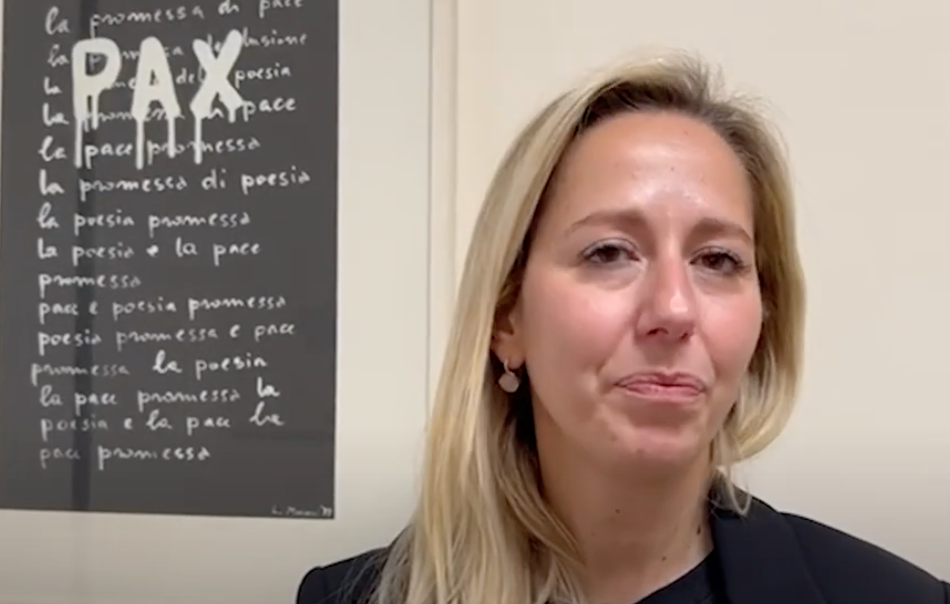 WATCH VIDEO
An interesting talk by Lamberto Pignotti –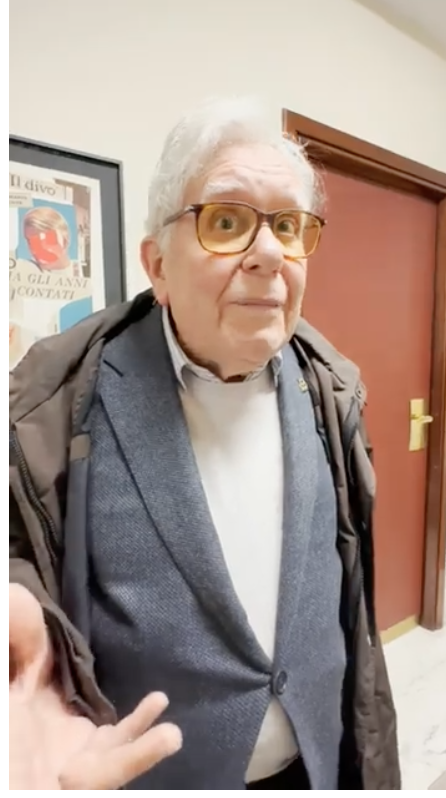 WATCH VIDEO
Artists in the exhibition:
Vincenzo Accame, Vincenzo Agnetti, Ruth Aklander, Elvira Alfageme, Alain Arias-Misson, Carlo Belloli, Mirella Bentivoglio, Tomaso Binga, Julien Blaine, Achille Bonito Oliva, Jean François Bory, George Brecht, Joan Brossa, John Cage, Julio Campal, Ugo Carrega, Luciano Caruso, Giuseppe Chiari, Henri Chopin, Herman Damen, Betty Danon, Augusto De Campos, Vicente De Percia, Álvaro De Sá, Stanislaw Dróżdż, Jean Dupuy, Pablo Echaurren, Anna Esposito, Amelia Etlinger, Heinz Gappmayr, Klaus Groh, Elisabetta Gut, Graciela Gutierrez Marx, Bernard Heidsieck, Dom Sylvester Houédard, Emilio Isgrò, Motoyuki Ito, Ernst Jandl, Hiroo Kamimura, Katué Kitasono, Etsushi Kiyohara, Annalies Klophaus, Milan Knížák, Jiří Kocman, Jiří Kolář, Maria Lai, Liliana Landi, Maurice Lemaître, Claudio Locatelli, Arrigo Lora Totino, Roberto Malquori, Lucia Marcucci, Stelio Maria Martini, Dóra Maurer, Hansjörg Mayer, Eugenio Miccini, Fernando Millán, Magdalo Mussio, Giulia Niccolai, Seiichi Nikuni, Anna Oberto, Martino Oberto, Luciano Ori, Claudio Parmiggiani, Rudolf Pawell, Michele Perfetti, Michael Joseph Phillips, Décio Pignatari, Lamberto Pignotti, Marko Pogacnik, Roland Sabatier, Sarenco, Alain Satié, Greta Schödl, Toshihiko Shimizu, Berty Skuber, Mary Ellen Solt, Adriano Spatola, Chima Sunada, Luigi Tola, Endre Tót, Timm Ulrichs, Emilio Villa, Rodolfo Vitone, Simona Weller, Syoji Yoshizawa, Franci Zagoričnik.
The exhibition brings together 267 works by 67 artists from different regions of the world, bearing witness to how visual poetry has overcome geographical barriers, creating a community of artistic and scientific research on the word.
The exhibition Global Visual Poetry 1950-1980 is conceived to highlight the transnational character of Visual Poetry, one of the most incisive artistic currents of the second half of the twentieth century, which was able to gather the legacy of the early avant-gardes and open itself, from the outset, to dialogue between different cultures and countries, overcoming geographical and identity barriers in the perspective of an inclusive and socially engaged art.
With over two hundred works, the exhibition offers a cross-sectional look at the research of exponents linked to the different verbal-visual experiments that emerged on a global scale from the post-war period onwards — from Concrete Poetry to Visual Poetry, from Object Poetry to New Writing — with the aim of highlighting the affinity and coherence of poetics of artists active in this line of research in various regions of the world, outside the Eurocentric canon.
Concrete poetry, as Max Bense stated in 1965, “does not separate languages, but unites them, mixes them”, and it is for this reason that from the beginning this current spread internationally in a widespread way and attracted authors working in South and North America, Germany, France, Italy, Switzerland, Portugal, Czechoslovakia or Japan.
The exhibition places particular emphasis on the crucial and pioneering role of Visual Poetry, in its various forms, in the debate on the social effects produced by mass culture at the time of the economic boom and on the critical position taken by visual poets towards consumerism and the excesses of capitalism.
The early attention to the environment and the ecological question, openly pacifist convictions, the denunciation of the marginal condition of women, the criticism of colonialism and Western hegemony, and interest in the economic and social imbalances linked to the economic miracle are issues at the heart of Visual Poetry, which contribute to its topicality and its current and growing critical fortune.
Starting from the local reality of their countries of origin, the artists active in this current did not fail to confront the problems raised by globalisation and to look beyond national borders, taking sides against the war in Vietnam or denouncing the conditions of poverty experienced by oppressed peoples.
The exhibition investigates the interdisciplinary character and the verbal-visual crossings developed by this tendency: in Visual Poetry, in fact, the word becomes space, image and body, enters a hybrid dimension based on the crossing between the visual, optical-perceptual, tactile and sound qualities of the word, in order to re-signify language and offer new possible ways of looking at reality.
The experimental attitude and the urgency to break out of disciplinary boundaries are peculiar traits of Visual Poetry, which bring the paths of the many artists active in Italy closer to those of authors present in other countries of the world within the complex and ramified verbal-visual galaxy.
Decolonial and pacifist instances, together with attention to the environment and the critique of consumerism, are the central themes of the exhibition: issues which, in the orbit of Visual Poetry, go hand in hand with the choice of practising an art of lightness, made of simple, everyday, “poor” means, with works often of small format, easy to disseminate and capable, also by virtue of this, of going beyond the elitist channels of art and of rescuing language from the wear and tear of habit in order to revive it.
The exhibition itinerary is articulated in three large sections which, while intersecting with each other, respond to the different trajectories that emerged in the broader constellation of Visual Poetry: typographic-concrete research, where the letter becomes plastic matter to build complex graphic architectures and dense textures of letters and alphabetic signs; experimentation with montage and collage, understood as a practice of criticising, from the inside, mass-media communication through irony and estrangement; body-writing, where the word is the palpable trace of the author’s gesture and, like a seismograph, records the course of the movements and vibrations of manual writing.
Although different from a stylistic and aesthetic point of view, these three lines intertwine, sometimes even overlapping, because they share the same utopian impulse, aimed at reformulating language to bring it closer to the urgencies of the collective and to challenge the sense of emptiness proposed by the ‘society of the spectacle’.
In Visual Poetry, said Eugenio Miccini, there is “a force that comes from its utopia, from its ideological anticipation of a new anthropological dimension, from the attempt, therefore, to bring aesthetics and life closer together and reunite them – by acting on man’s consciousness”.
And it is in this close dialogue between poetry, image and social utopia that Visual Poetry leaves today perhaps its most precious legacy.
Dicastery for Culture and Education
piazza Pio XII, 3/3 – Vatican City
Until 20 June 2025 it is possible to book a visit by sending an email to: eventi@dce.va